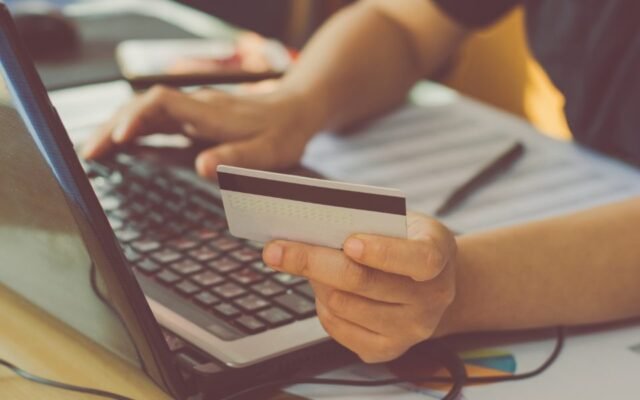
A product with thousands of glowing reviews feels like a safe bet, which is exactly why some sellers try to manufacture that feeling. Fake, paid-for and selectively collected reviews can make an ordinary product look exceptional, and they are not always easy to tell apart from the real thing at a glance.
You do not need special software to protect yourself. Fake and inflated reviews tend to follow patterns, and once you know them you can check a product listing in about ten minutes. This guide explains those patterns, what the “verified purchase” label really tells you, and a simple routine to run before you buy.
Why fake reviews exist at all
Ratings drive sales. A higher average and a bigger review count can push a product up search results and make shoppers more willing to pay, so there is a strong incentive to game them, on big marketplaces and small shops alike.
Not every misleading review is invented from nothing. Some are written by real buyers who were given the product free, or refunded, in exchange for a positive post. Others are genuine but cherry-picked, because the seller only asked happy customers to write one. The result is the same for you: a rating that looks more reliable than it is.
Regulators have noticed. In the US, the Federal Trade Commission has a rule that targets fake reviews and the buying of positive reviews, and the UK has made posting or commissioning fake reviews unlawful under its consumer protection law. The European Union also requires traders to say whether and how they check that reviews come from real customers. Rules like these help, but enforcement takes time, so your own judgment still matters.
Patterns that should make you pause
No single sign proves a review is fake, and careful fakes can look perfectly normal. Look for several of these signs together:
- Review bursts. Dozens of reviews posted within a few days, often soon after a product launches, followed by a long quiet spell. Sorting by date often reveals the pattern.
- Vague praise. “Great product, works perfectly, highly recommend” could describe anything. Real owners tend to mention specifics: the fit, the battery after a month, the smell, how setup went.
- Repeated phrasing. Several reviews that share the same unusual phrase, the same structure or the same marketing claims, sometimes word for word from the product description.
- Reviews for a different product. Comments about a phone case on a listing for a kitchen scale suggest reviews carried over from an older or unrelated listing. Check that reviews mention the item you are looking at, including its size or color.
- Thin reviewer profiles. Where profiles are visible, accounts with a handful of reviews, all five stars, all for unrelated brands and all posted within a short period, deserve a second look.
- A missing middle. Lots of five-star and one-star reviews with very few in between. Many honest products show this shape too, so treat it as a reason to read the low ratings closely, not as proof.
Incentivized reviews, review gating and rating inflation
Some of the most misleading reviews are written by real people. An incentivized review is one written in exchange for something: a free product, a refund after posting, a discount on the next order or entry into a prize draw. Even when the reviewer means well, people tend to feel generous toward something they did not pay for, and some offers quietly make the reward depend on a positive rating.
Watch for the card tucked into the box that offers a gift card or a free accessory “for sharing your experience,” especially if it mentions five stars. Some platforms ban this kind of offer. If you receive one, you have learned something useful about how that seller collects its ratings.
Review gating is quieter. A business sends a short survey first, then invites only the customers who answered positively to post a public review, while unhappy customers are steered to a private feedback form. Every public review may be genuine, yet the overall score is skewed. You cannot see gating directly, but a rating that seems unusually uniform for the type of product is a hint.
Rating inflation is the general drift of averages upward. On many sites, a large share of products seem to sit at four stars or above, so the gap between 4.3 and 4.7 can matter more than it looks. Compare a product with similar items on the same site, and pay more attention to what reviewers say than to the average.
What “verified purchase” does and does not prove
Many shopping sites label reviews from accounts that bought the item on that site. That label is useful: it usually means the platform has a record of a purchase linked to the reviewer’s account. It filters out some of the crudest fakes.
It does not prove the reviewer paid full price, was not refunded afterward or wrote honestly. Schemes that reimburse buyers outside the platform can produce reviews that look verified. Each site also sets its own rules for when the label appears, so a verified badge on one site may not mean the same thing on another. Treat it as one point in a review’s favor, not as a guarantee.
A 10-minute check before you buy
For small purchases, a quick skim is enough. For anything you would be annoyed to lose money on, run through these steps:
- Sort reviews by most recent and read the last few weeks. Recent reviews reflect the current version of the product and the current seller.
- Read the three-star and two-star reviews first. They are often the most detailed and the least likely to be part of a campaign.
- Search within the reviews for the problem you care about most, such as “battery,” “sizing,” “leak” or “customer service.”
- Check that the reviews describe this exact product, model and size.
- Look beyond the listing. Owner forums, independent reviews and comparison articles give you a view the seller does not control. Our guide to reading sponsored reviews explains how to weigh those sources too.
- Check the return policy and who the seller actually is, so you know what happens if the product disappoints.
If you are buying during a big sale, do this check before the event starts, when no countdown timer is pushing you. Our guide to spotting real deals during sale events covers how to judge the price itself, which matters just as much as the rating.
What to do if you spot fake reviews
Most marketplaces, app stores and review sites let you report a review or a listing, usually through a link or menu next to the review. If a seller offered you a reward for a positive review, the platform will generally want to know, and in some countries consumer protection agencies accept reports as well.
If you have already bought something that turned out very differently from its reviews, start with the seller and then the platform’s return or buyer protection process. Afterward, leave an honest, specific review of your own to help the next shopper.
Quick checklist
Keep these questions in mind whenever a rating looks almost too good. If several answers worry you, read more widely before you buy, or choose a product with a longer, steadier review history. You will find more practical buying advice in our shopping section.
- Did many reviews arrive in a short burst?
- Do the reviews mention specific details, or only general praise?
- Do they describe this exact product?
- What do the recent two-star and three-star reviews say?
- Was anyone offered a reward for reviewing?
- What do sources outside the seller’s page say?
- Can you return the item easily if it disappoints?